Talisker vs Highland Park: Island Rivalry
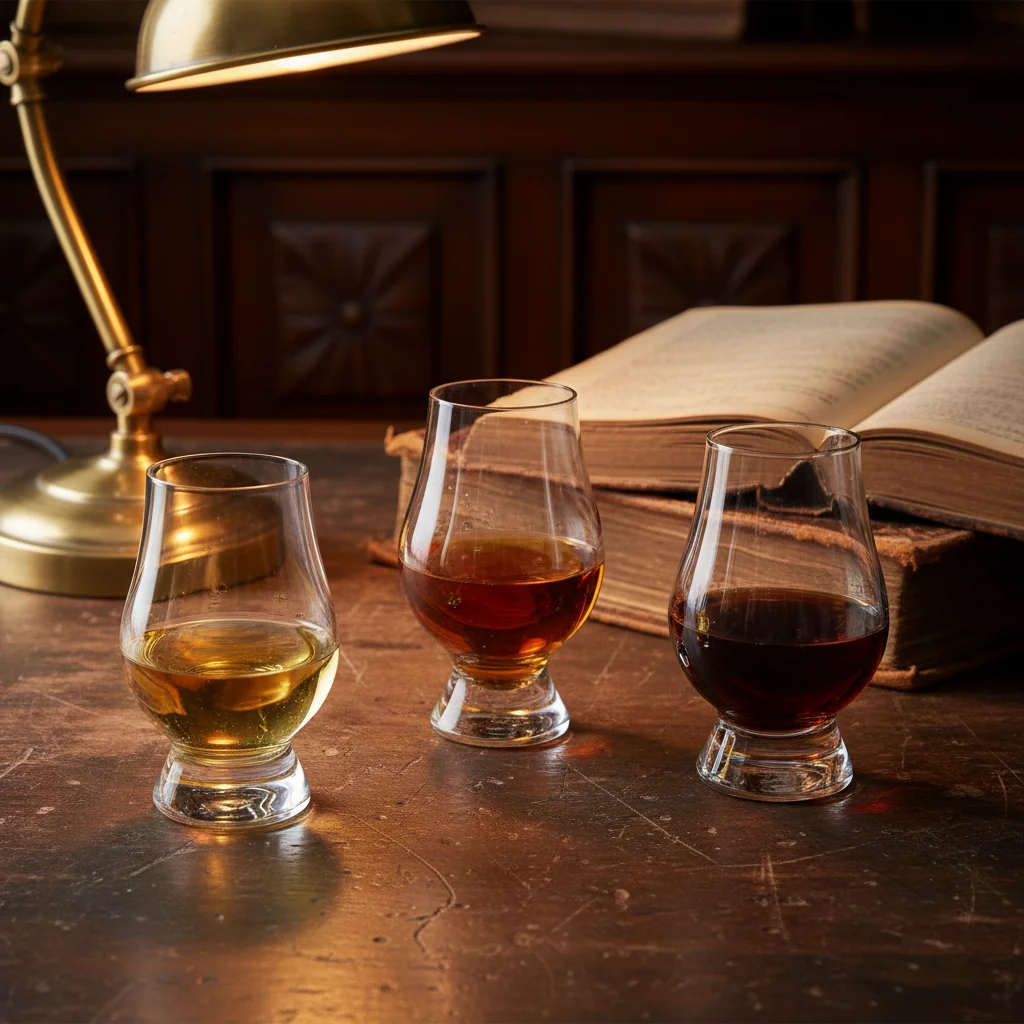
The chart shows two islands, separated by the width of the Scottish mainland. Skye to the west, Orkney to the north — both battered by weather systems that have not read the tourism brochures. Each island has a distillery that defines it, and each distillery makes whisky that tastes like the place it comes from. This is not metaphor. You can taste the difference between Atlantic gales and North Sea wind. For the wider context of Scotland's island distilleries — including Arran, Mull, Jura, Raasay, and the Outer Hebrides — see the Scottish islands voyage.
Talisker and Highland Park are both island distilleries, but they are not the same kind of island distillery. One punches you in the mouth with black pepper and sea spray. The other wraps you in heather smoke and honey, then reveals layers you were not expecting. Choosing between them is like choosing between a storm and a sunset — both are magnificent, and preference says more about you than it does about the whisky.
The Tale of the Tape
| Talisker | Highland Park | |
|---|---|---|
| Founded | 1830 | 1798 |
| Location | Carbost, Isle of Skye | Kirkwall, Orkney |
| Owner | Diageo | Edrington |
| Floor maltings | No | Yes |
| Peat style | Standard Highland peat | Heather-peat (Hobbister Moor) |
| Flagship | Talisker 10 | Highland Park 12 |
| ABV (flagship) | 45.8% | 40% |
| Tours | Yes | Yes |
History
Talisker
Talisker has been the only distillery on Skye for almost two centuries (Torabhaig arrived in 2017 as the island's second). Founded in 1830 by Hugh and Kenneth MacAskill at Carbost, on the shores of Loch Harport, the distillery has survived fires, closures, rebuilds, and changes of ownership. A devastating fire in 1960 destroyed the still house, and the replacement stills were built as exact replicas — including the distinctive swan-neck lyne arms with a U-bend that forces reflux and contributes to the house style.
Talisker joined Diageo's Classic Malts range in 1988, selected to represent the Islands category. This was the making of the brand commercially. The Talisker 10 became the default recommendation for anyone who wanted something smoky but not Islay-level peaty — a gateway to bigger flavours.
The distillery runs five stills (two wash, three spirit) — an unusual odd number that arose from the 1960 rebuild. It gives the distillery flexibility in how it balances its cuts. The water source is a burn that runs through peat moor before reaching the distillery, adding to the minerality in the final spirit.
Highland Park
Highland Park is older, grander, and more self-sufficient. Founded in 1798 in Kirkwall — Orkney's capital — it claims to be the most northerly Scotch whisky distillery, a title it held unchallenged until Wolfburn opened on the mainland. The distillery was allegedly built on the site where the 18th-century smuggler Magnus Eunson hid his illicit still beneath the pulpit of a church. The story may be embellished, but the location is real.
What sets Highland Park apart from virtually every other Scotch distillery is its peat. Orkney has no trees and never has had — the peat on Hobbister Moor is formed from compressed heather rather than wood and vegetation. When barley is dried over Orkney peat, it absorbs a floral, aromatic smokiness that is fundamentally different from mainland peat. Highland Park still operates its own floor maltings, processing about 20% of its malt requirement on-site with this heather-peat. The remaining 80% comes from the mainland, but that 20% is enough to define the house style.
Edrington (who also own Macallan) acquired Highland Park in 1999. The core range has been through various redesigns, but the liquid has remained remarkably consistent. The 12 Year Old is often cited as the most perfectly balanced whisky in Scotland — a claim that is hard to argue with.
House Style
Talisker: Pepper and Sea Spray
Talisker's calling card is black pepper. Not metaphorical pepper — an actual peppery, almost chilli-like warmth that hits the back of the palate and builds. Alongside this, there is brine, kelp, a wisp of woodsmoke, and something volcanic that people struggle to name but always recognise. The finish is long and warming, with that pepper returning again and again.
The maritime character is aggressive. Talisker does not whisper "I come from an island." It grabs you by the collar and shoves your face into a rock pool. There is citrus underneath — lemon peel, orange zest — and a sweetness from the malt, but the dominant impression is always savoury, maritime, and peppery.
Highland Park: Heather Smoke and Honey
Highland Park is a diplomat where Talisker is a fighter. The heather-peat gives a smoke that is gentle, floral, and aromatic rather than aggressive. On top of this sits honey — lots of it — along with dried fruit, orange marmalade, and a warm spiciness from the sherry-seasoned casks. The balance between smoke, sweetness, and spice is what makes Highland Park remarkable. No single element dominates.
Where Talisker is defined by what hits you first, Highland Park is defined by what you keep finding. The second sip reveals something the first did not. The third adds another layer. It is a whisky that rewards patience and attention, and it does not need to shout to be heard.
The Flagships: Head to Head
Talisker 10
Talisker
Talisker 10 Year Old
Explosive black pepper, sea salt, bonfire smoke, dried seaweed, lemon peel, and a finish that burns like a coastal wind. Bottled at 45.8% — muscular, unapologetic, and utterly distinctive.
Buy on The Whisky ShopThe Talisker 10 is bottled at 45.8% — a deliberate choice that gives it noticeably more body and intensity than most standard-range malts. It is non-chill-filtered in practice (Diageo do not always confirm this clearly), which preserves texture and flavour. The higher ABV means you get more of everything: more pepper, more brine, more smoke. Adding a few drops of water opens up the citrus and sweetness, but many Talisker drinkers prefer it neat for the full maritime assault.
Highland Park 12
Highland Park
Highland Park 12 Year Old Viking Honour
Heather honey, orange marmalade, gentle peat smoke, dried fruit, vanilla, and warm baking spices. Silky texture with a medium-long finish that balances sweetness and smoke perfectly. The most balanced whisky in Scotland, some say.
Buy on The Whisky ShopThe Highland Park 12 is bottled at 40% — the legal minimum for Scotch. Some drinkers feel it could benefit from a higher ABV, and the 18 Year Old (at 43%) supports that theory by offering noticeably more depth. But the 12 at 40% is still remarkably flavourful, which speaks to the quality of the underlying spirit. The balance between heather smoke, honey, and sherry influence is near-perfect at this age.
Beyond the Flagships
Both distilleries have strong extended ranges:
Talisker offers the Storm (no age statement, more aggressive peat), Port Ruighe (port-finished, adding berry sweetness), the 18 Year Old (more refined but still peppery), and occasional Distillers Editions. The 18 is where Talisker really shines for those willing to spend more — the pepper softens slightly, the oak adds depth, and the maritime character becomes more nuanced.
Highland Park extends to the 18 Year Old (widely considered one of the best value whiskies in Scotch at any age), the 25 Year Old, and various travel-retail exclusives. The Viking series (using Norse-inspired names) divides opinion on branding but the liquid quality is solid. The 18 is the one to try if you want to understand what Highland Park can do at its best — the sherry influence deepens, the smoke recedes further, and the honey becomes almost decadent.
The Verdict
This is closer than the Ardbeg vs Laphroaig showdown because these two distilleries are not trying to do the same thing. Talisker is immediate, dramatic, and unmistakable. Highland Park is layered, balanced, and endlessly rewarding. Both are brilliant.
But if I am buying one bottle to drink over the course of a month — poured on a Tuesday evening when I want something that will hold my attention — I am reaching for Highland Park. The heather-peat, the honey, the way the whisky keeps revealing new things on repeated tastings — it is a whisky that gets better the more you pay attention to it. Talisker hits you with everything on the first sip and keeps hitting. Highland Park unfolds.
The margin is thin. On a stormy night with rain hammering the windows, Talisker would win. On a quiet evening with nowhere to be, Highland Park takes it. Life contains more quiet evenings than storms, so Highland Park edges this one.
But Talisker drinkers already know they are right, and nothing I say will change their minds. That is the pepper talking.
Continue the voyage
Ardbeg vs Laphroaig: The Islay Peat Duel
Two Islay legends, both founded in 1815, separated by two miles of coastline. We compare Ardbeg and Laphroaig head-to-head — and pick a winner.
Glenfiddich vs Glenlivet: Speyside's Big Two
The two most famous single malts on earth. We compare Glenfiddich and Glenlivet — their history, house styles, and flagship bottles — and deliver a verdict.
The 15 Best Distillery Tours in the UK & Ireland
We ranked the 15 distillery tours actually worth your time across Scotland, England, Wales, and Ireland — from Islay icons to hidden Welsh gems.