The Islay Pilgrimage: Every Distillery on Whisky's Wildest Island
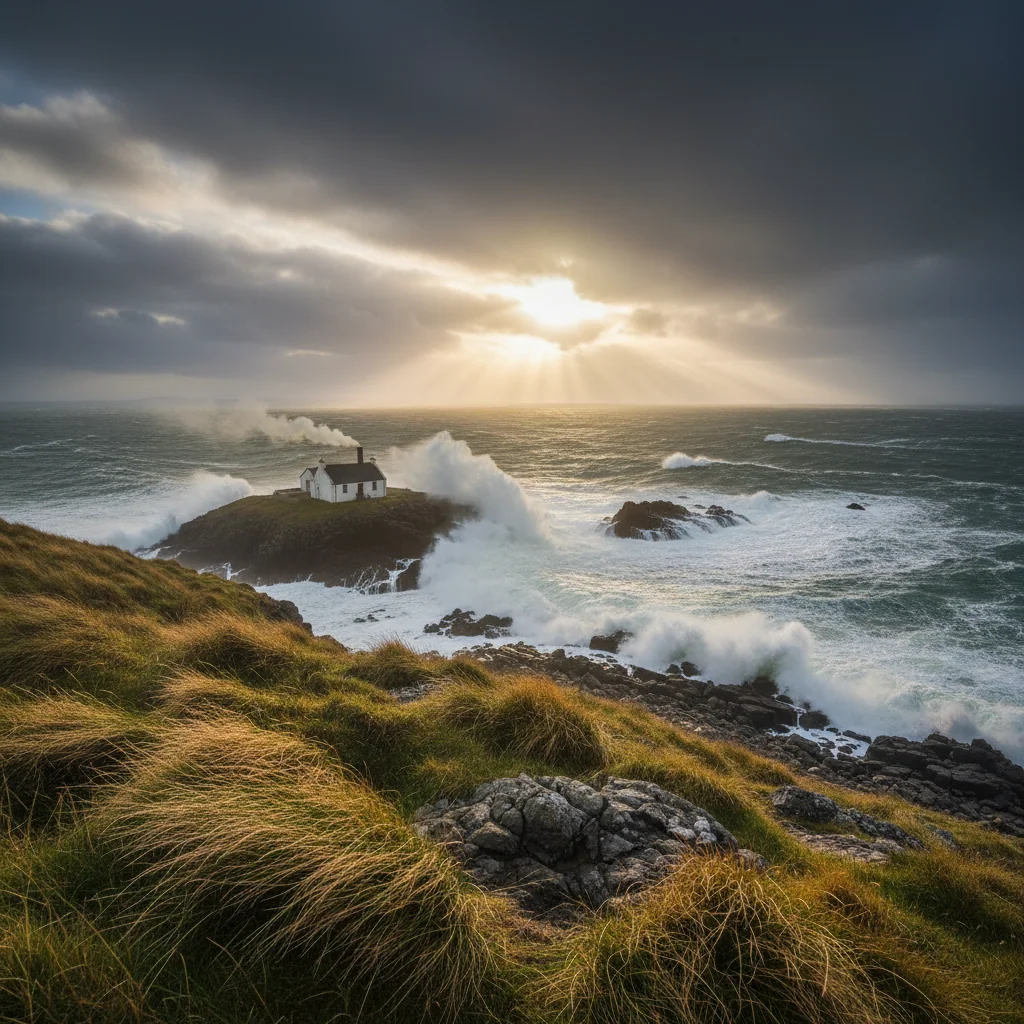
Wind off the Atlantic hits the ferry broadside as Islay rises from the water — low, treeless, and green as old copper. The air tastes of salt and peat smoke before you clear the harbour wall. Port Ellen's maltings chimney stands like a lighthouse above the village, and the smell of phenols drifts out across the bay in a haze that will follow you for the next four days, soaking into your coat, your hair, the pages of your notebook.
Islay (say "eye-luh") is an island of 3,000 people, 12 working distilleries, and an almost religious devotion to peat. It is barely twenty-five miles long. You could drive from one end to the other in forty minutes, but you will not, because every few miles there is another whitewashed distillery demanding you stop, taste, and stay a while. This is the island that made peat smoke a personality trait.
The Southern Shore: Peat Country
The three distilleries that line the coast road south of Port Ellen are responsible for Islay's reputation as whisky's smoky heartland.
Laphroaig DistilleryScottish IslandsToursShop comes first. Founded in 1815, it remains one of the only distilleries in Scotland with active floor maltings, and its spirit is the most divisive in whisky: iodine, TCP, burning hospitals, seaweed drying on hot rocks. People either love it or recoil. There is no middle ground. The Quarter Cask expression — matured in smaller barrels for greater wood interaction — is the gateway drug. The Friends of Laphroaig programme lets you claim your own square foot of Islay peat bog, which is exactly the kind of thing that makes sense after enough drams.
Lagavulin DistilleryScottish IslandsTours sits a mile east, famous for its 16-year-old — probably the most critically acclaimed standard single malt in Scotland. Where Laphroaig is medicinal and aggressive, Lagavulin is smoky and sophisticated. Dry peat, bonfire embers, iodine — but with a sweetness underneath that rounds everything out. The distillery tours are small, personal, and consistently excellent.
Lagavulin Distillery
Lagavulin 16 Year Old
Massive peat smoke tempered by a core of dried fruit sweetness. Bonfire embers, iodine, and tarred rope on the nose. Rich and oily on the palate with sea salt, dark chocolate, and smoked meat. The finish stretches for minutes — dry peat, espresso, and a ghost of vanilla. One of Scotland's great whiskies.
Buy on The Whisky ShopArdbeg DistilleryScottish IslandsToursShop completes the trio. If Lagavulin is a controlled burn, Ardbeg is the wildfire. (The rivalry between these two southern neighbours runs deep — our Ardbeg vs Laphroaig comparison breaks it down in full.) This is the most intensely peated of the three, yet somehow the most complex — lime zest, smoked fish, coal tar, and an unexpected sweetness that makes it dangerously drinkable at any time of day. The distillery's covered terrace overlooking the bay is one of Islay's great spots, and the cafe does proper food.
Ardbeg Distillery
Ardbeg Ten Years Old
A controlled explosion of peat smoke, lemon curd, and smoked bacon. Pine resin and creosote on the nose give way to a surprisingly sweet palate — vanilla, toffee, and black pepper wrapped in woodsmoke. The finish is long, dry, and mentholated with a citrus lift. Non-chill-filtered at 46% — exactly right.
Buy on The Whisky BarrelThe Kildalton Road: Port Ellen Reborn
Between Laphroaig and Ardbeg, the ruins of Port Ellen DistilleryScottish IslandsTours stood silent from 1983 until Diageo reopened it in 2024. The original Port Ellen single malts became some of the most collectible and expensive bottles in whisky, with rare annual releases fetching thousands. The reopened distillery is producing new spirit again, but it will be years before we know whether the new make can match the legend. Worth visiting for the history alone.
The West Coast: Bruichladdich and Kilchoman
Bruichladdich DistilleryScottish IslandsToursShop is Islay's progressive outlier. Under the "Progressive Hebridean Distillers" banner, they produce three entirely different whiskies: the unpeated Classic Laddie (proving Islay can do delicate), the heavily peated Port Charlotte, and the super-peated Octomore — the most heavily peated commercially available whisky in the world at over 200 PPM phenols. The distillery has no computers controlling its stills. Everything is done by sight, sound, and experience.
South along the coast, Kilchoman DistilleryScottish IslandsToursShop operates as Islay's farm distillery. Founded in 2005, it grows its own barley, malts it, distils, matures, and bottles entirely on site. The 100% Islay expression — made entirely from estate-grown Concerto barley — is one of the most terroir-driven whiskies in Scotland. Machir Bay, their core expression, is peated, maritime, and priced fairly.
The North: Elegance and Restraint
The northern distilleries offer a different Islay. Bunnahabhain DistilleryScottish IslandsToursShop produces predominantly unpeated spirit that tastes of sea salt, dried fruit, and the kind of maritime influence that comes from warehouses sitting directly on the shore. The 12-year-old, bottled at 46.3% and non-chill-filtered, is one of the best-value single malts on the island.
Caol Ila DistilleryScottish IslandsTours is Islay's largest distillery by volume, much of its production going into Johnnie Walker blends. The 12-year-old is a revelation for those who think all Islay whisky tastes the same — it is peated, yes, but with an oily elegance and a citrus note that Caol Ila does better than anyone.
Ardnahoe DistilleryScottish IslandsToursShop, Islay's newest distillery (2019), perches on the hillside above the Sound of Islay with views across to Jura. Founded by Hunter Laing, its first official releases are just beginning to appear, and early signs are very promising.
Bowmore: The Centre
Bowmore DistilleryScottish IslandsToursShop, founded in 1779, is the oldest distillery on Islay and sits right in the middle of everything — geographically and stylistically. The peat level is moderate, the sherry influence is generous, and the spirit has a distinctive floral lavender note that marks it out from the rest of the island. Bowmore still malts a portion of its own barley on site, and the excess heat from the kiln warms the local swimming pool. Community spirit, quite literally.
And Then There Were Twelve
Laggan Bay DistilleryScottish Islands, Ian Macleod Distillers' new project, is the latest addition. As of early 2026 it is not yet producing, but when it does, Islay will have thirteen — an island that continues to grow when logic suggests it should have reached saturation decades ago.
Planning Your Visit
Getting there: CalMac ferries run from Kennacraig (Kintyre peninsula) to Port Ellen and Port Askaig — the crossing takes around two hours and sails several times daily in peak season. Book at calmac.co.uk well ahead; car spaces in summer and during Feis Ile disappear fast. Kennacraig is about 2.5 hours from Glasgow by car. There are also Loganair flights from Glasgow to Islay Airport, with the plane landing roughly forty minutes after it takes off. Either way, getting to Islay requires planning — there is no spontaneous arrival on this island.
How long: Four days minimum. You could rush it in three, but Islay rewards slowness. The distilleries are not going anywhere, and neither should you.
Best time: Late May for Feis Ile (the Islay festival of music and malt), when each distillery holds an open day with exclusive bottlings. September is quieter, cheaper, and just as beautiful.
Getting around: You need a car. There is no meaningful public transport. The roads are single-track in places and shared with sheep.
Where to stay: Bowmore and Port Charlotte are the best bases. The Machrie Hotel on Laggan Bay is a treat if the budget stretches. Port Ellen is small but well-positioned for the southern distilleries.
Pacing yourself: Twelve distilleries, four days — that is three a day. Use the spittoons. Seriously. Islay's whiskies are frequently bottled at 46% or higher, and the measures are generous. Nobody will judge you for spitting.
Planning distillery tours: Several Islay distilleries — Ardbeg, Lagavulin, and Bruichladdich in particular — run tours worth booking in advance. See our guide to the best distillery tours in the UK for what to prioritise, and our ranking of every Islay distillery by peat level if you want to sequence them from lightest to heaviest.
See every Islay distillery on the map and filter by tours, shops, and founding year in the Chart Room.
Continue the voyage
The Speyside Voyage: 53 Distilleries, One River Valley
A data-driven guide to all 53 Speyside distilleries — from Glenfiddich to hidden workhorse malts that power Scotland's greatest blends.
North Highland & Orkney: Where Whisky Meets the Arctic
20 distilleries along Scotland's wild north coast and out to Orkney — from Old Pulteney's harbourside stills to Highland Park's heather peat.
English Whisky: The Lakes, Cotswolds, and London's New Wave
22 English distilleries from Norfolk to the Lake District — a new whisky nation finding its voice outside Scotland's shadow.